
Closure control
Vibratory bowl sorting, cork rails, escapements and custom chucks help present T‑corks consistently before the press head descends.
T‑cork capping specialists
A focused UK resource for specifying T‑corkers: compact pneumatic presses, semi-automatic cork stations, automatic cork feeders, linear press cappers and high-speed rotary corking machines.

Configure the machine around your bottle, neck finish, cork dimensions and target output.
Specialist knowledge
Good T‑cork capping is not just a press stroke. It depends on closure orientation, neck fit, insertion depth, bottle handling, clean operation and a machine layout that matches your production rate.
Vibratory bowl sorting, cork rails, escapements and custom chucks help present T‑corks consistently before the press head descends.
Press travel, air pressure, bottle support and neck alignment are set to prevent skewed corks, over-insertion, top damage or inconsistent bottle presentation.
Automatic corkers can be supplied as stand-alone cells or integrated with filling, labelling, conveyors and end-of-line automation.
Machine range
Start with the machine type, then confirm bottle and closure dimensions. Final output always depends on format, operator workflow, utilities and integration scope.
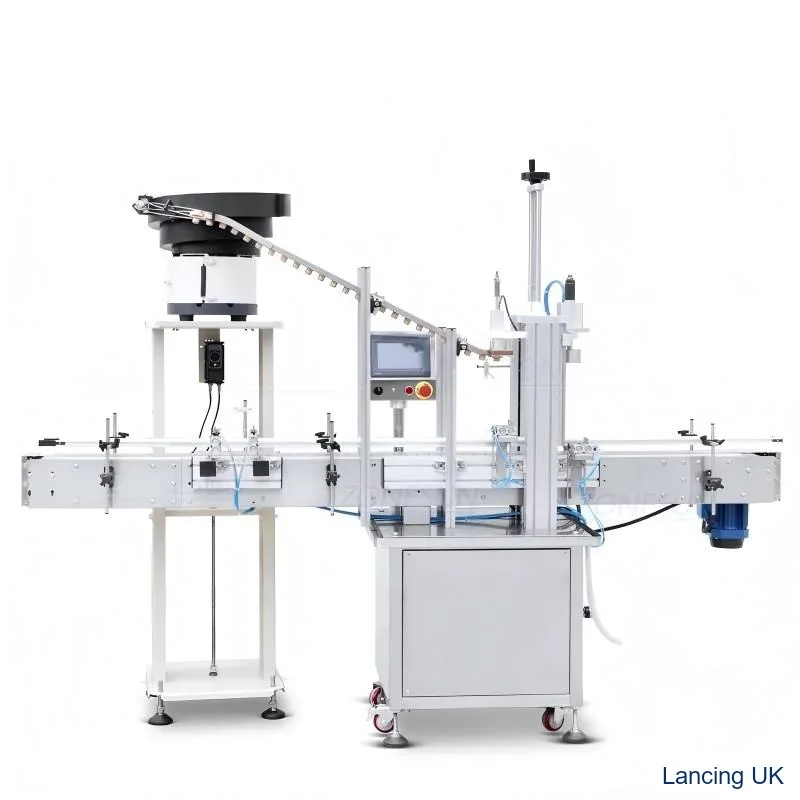
Automatic T‑cork press capper
An automatic press-on capping machine for T-corks, inner plugs and similar push-fit closures. A vibrating bowl sorter orders the closures before feeding them to the capping head, helping maintain a consistent orientation and a repeatable insertion depth.
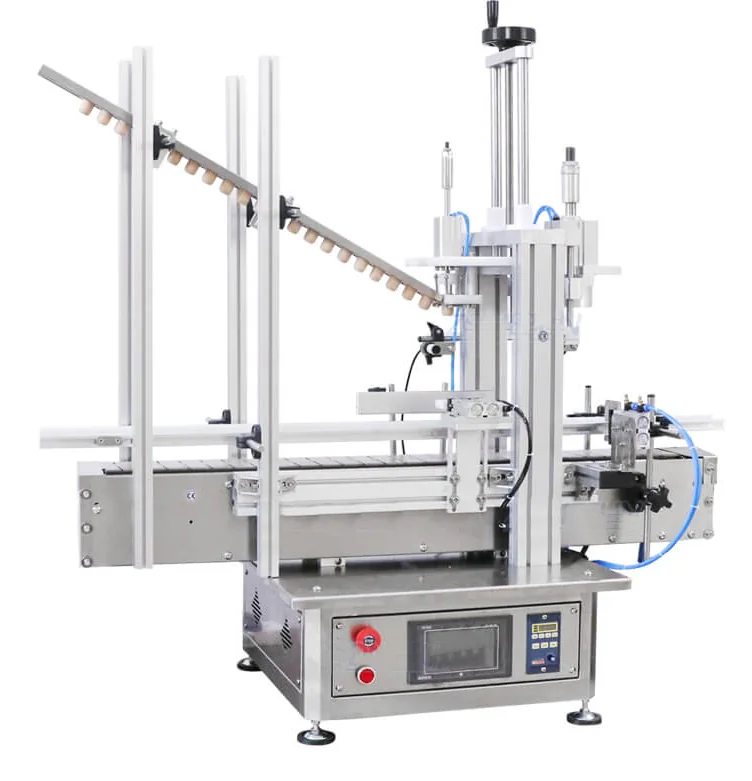
Automatic cork press with custom guide rail
A custom automatic capping machine designed for pressing wooden T-corks and similar closures into wine bottles and related containers. The cork guiding rail is built around the closure diameter so the machine can feed, position and press the cork with minimal manual handling.
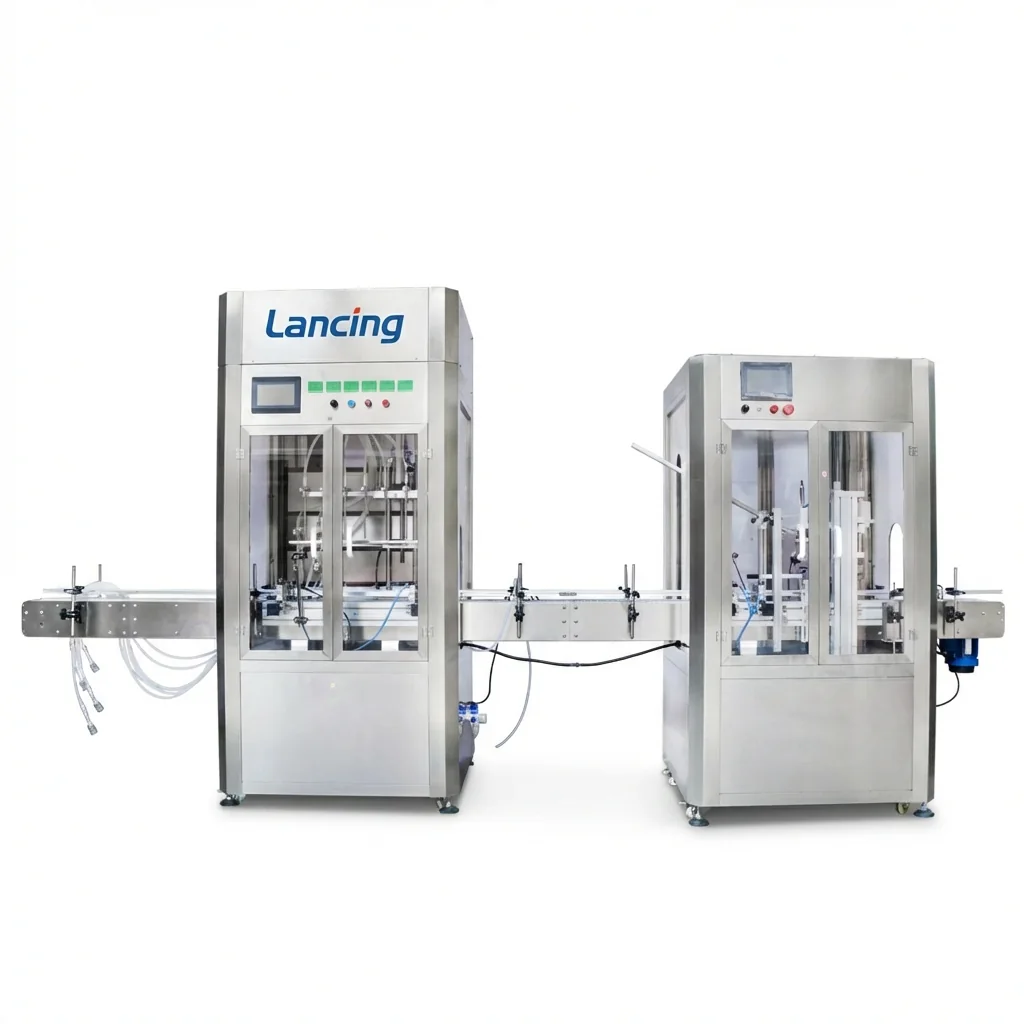
Fully automatic cork press capper
A fully automatic cork feeding and pressing machine with a protective dust cover. It is designed to maintain clean, repeatable operation while pressing corks into bottles at production speed, and can be integrated with filling and labelling machines.
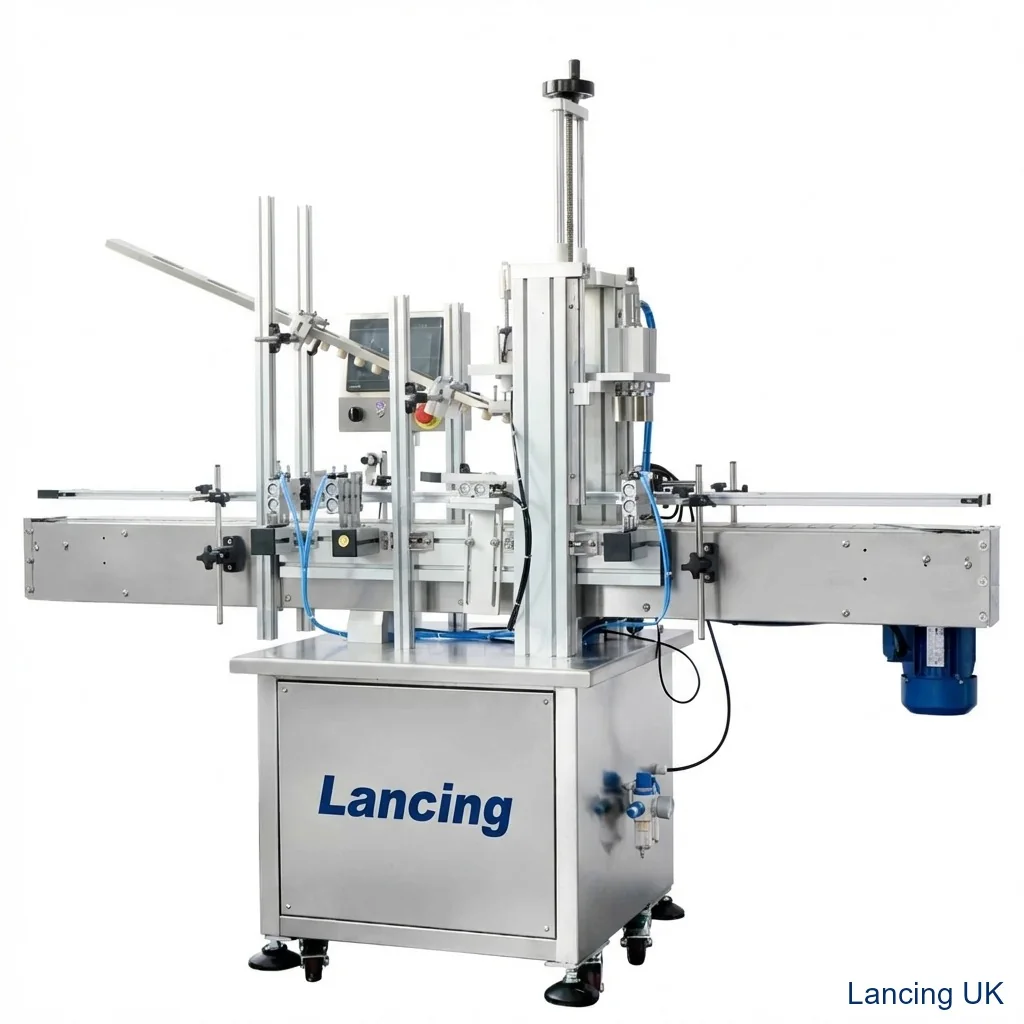
Automatic wine bottle cork feeder and press
An automatic cork feeding and capping machine for efficient wine bottle corking. It feeds corks automatically and presses them into place with precision, and is suited to integration with filling and labelling equipment for automated wine bottling lines.
Applications
Specification support
Technical resource
Understand machine types, cork feeding, press heads, insertion depth and line integration.
Read the guideCheck the dimensions and samples required to avoid jams, skewing, damage or inconsistent insertion.
Check compatibilityDiagnose common corking issues such as crooked corks, variable depth, bowl jams, top damage and slow throughput.
Find the causeQuick answers
A T‑cork capping machine presses a T-shaped stopper into a bottle neck. Depending on configuration it can also sort, feed and orient closures before pressing them to a controlled depth.
Suitability depends on bottle height, diameter, neck finish, cork shank diameter, cork height and closure top geometry. Lancing UK can review samples and recommend the correct chuck, guide rail and press settings.
Yes. Automatic T-cork capping systems can be configured with conveyors, sensors and control interfaces for integration with filling, labelling and end-of-line packaging equipment.
Compact and linear automatic systems in this range cover approximately 20–60 bottles per minute depending on model and format, while rotary equipment can reach around 6000 bottles per hour for suitable formats.
Send bottle samples or drawings, cork dimensions, expected output, line layout, available utilities and whether you need cork sorting, feeding, dust cover, conveyor integration or commissioning support.
Specify the right T‑corker
Share bottle height, diameter, neck finish, cork dimensions, expected units per hour and whether the machine must integrate with filling, labelling or existing conveyors.