Automatic cork press with custom guide rail

LU‑XG16D1 Automatic Cork Pressing Machine with Cap Feeder

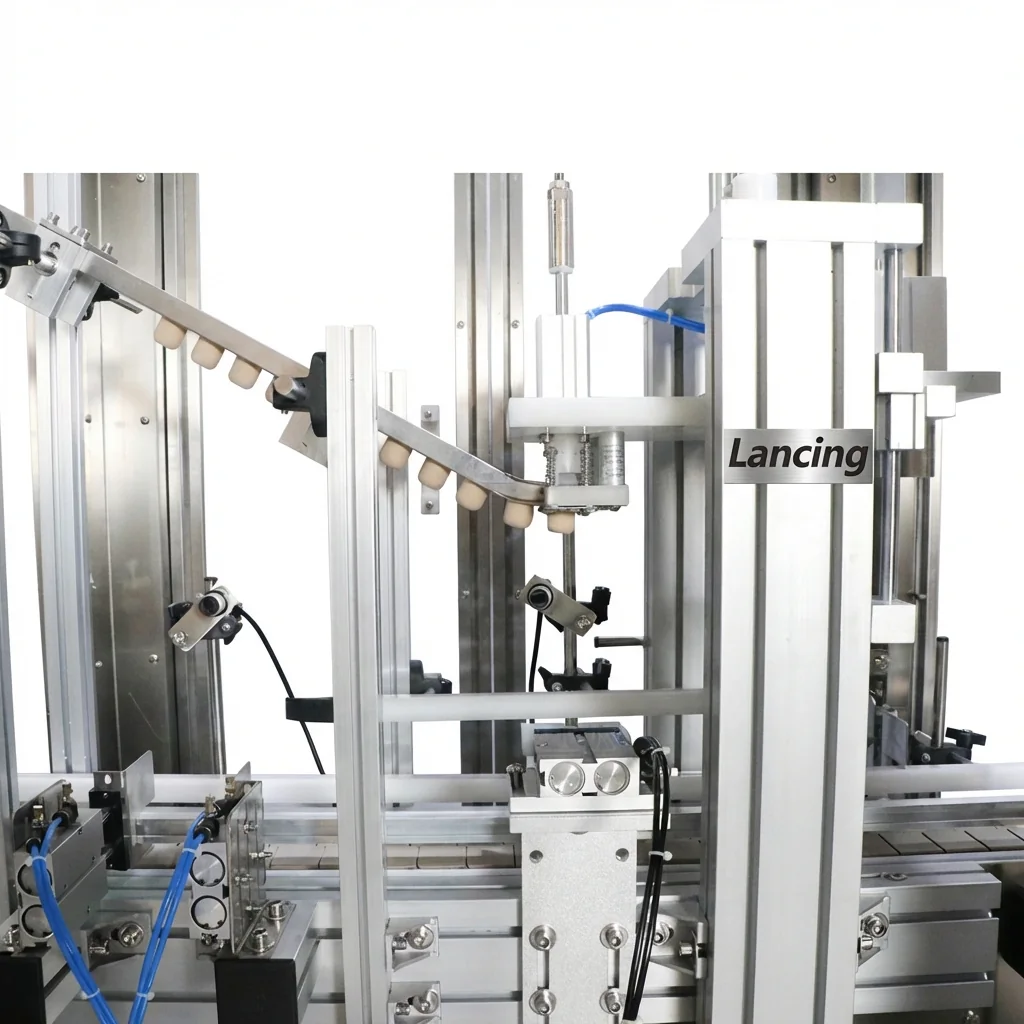
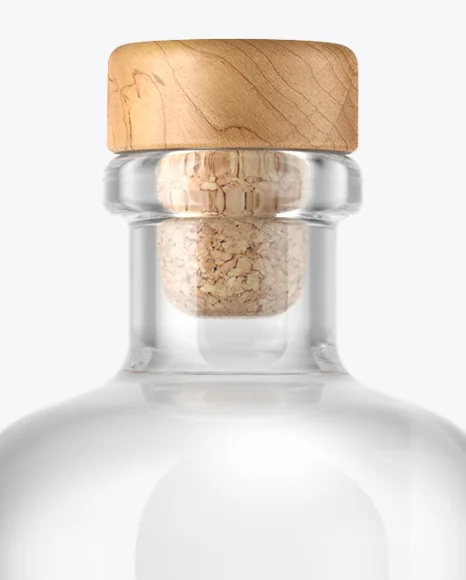
A custom automatic capping machine designed for pressing wooden T-corks and similar closures into wine bottles and related containers. The cork guiding rail is built around the closure diameter so the machine can feed, position and press the cork with minimal manual handling.

SKU
LU-XG16D1
Throughput
20–60 bottles/minute
Configuration
Quote confirmed
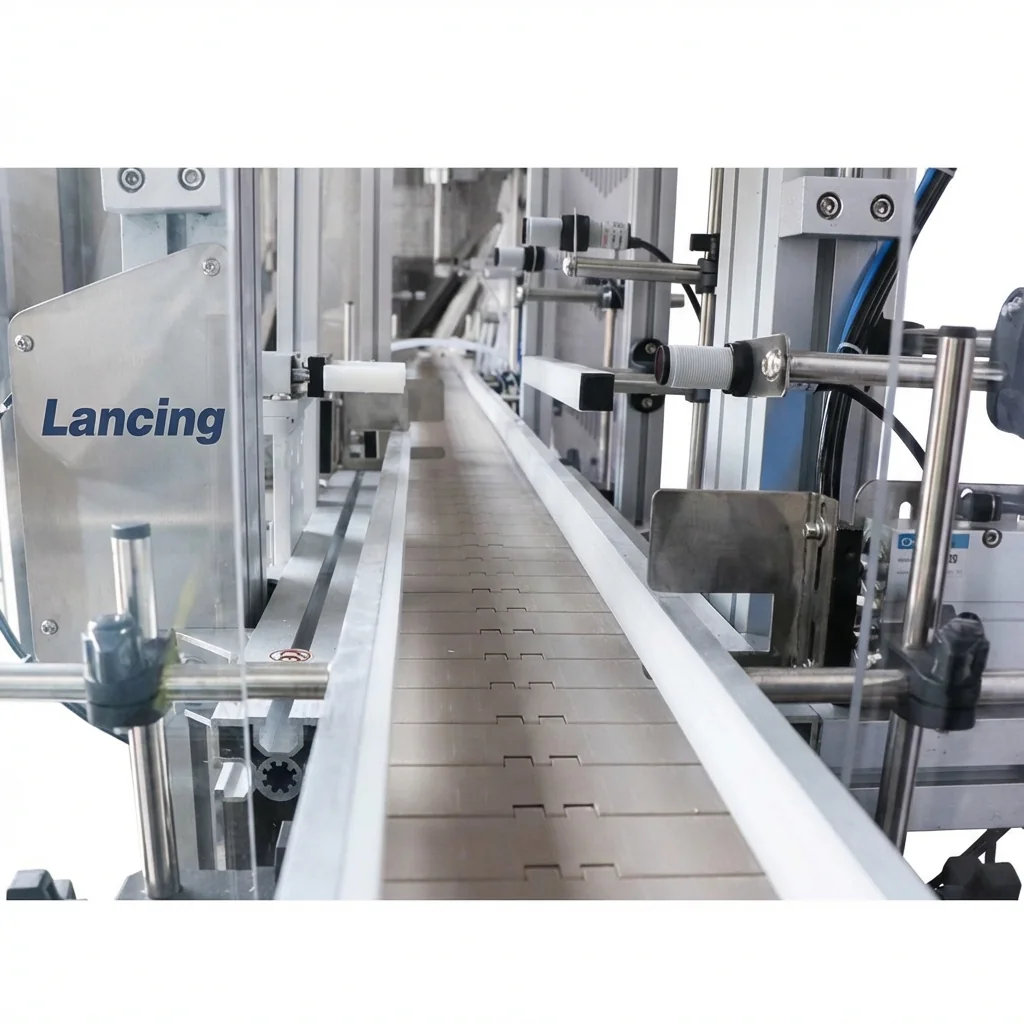
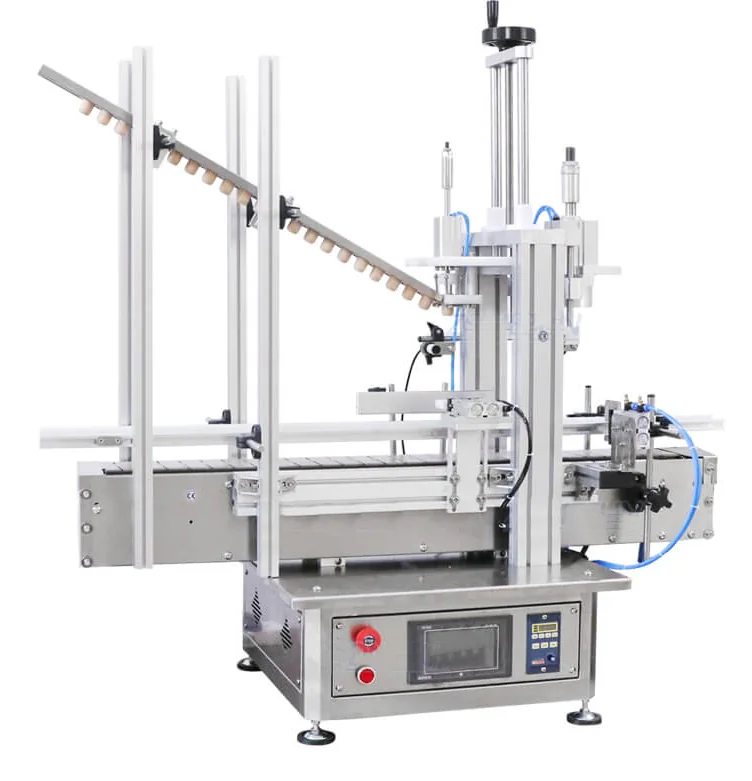
LU‑XG16D1 cap feeder and cork insertion machine detail

Machine overview

A custom automatic capping machine designed for pressing wooden T-corks and similar closures into wine bottles and related containers. The cork guiding rail is built around the closure diameter so the machine can feed, position and press the cork with minimal manual handling.

Best suited to

  • Wineries and beverage producers scaling from manual corking
  • Automatic lines requiring cork feeding before pressing
  • Projects where the guide rail must match a specific cork diameter

Key specification

Machine modelLU‑XG16D1
Working voltageAC 220 V / 110 V, 50–60 Hz
PowerApprox. 1100 W
Bottle height30–300 mm
Cap diameter18–70 mm
Bottle diameter30–100 mm
Working speed20–60 bottles/minute, dependent on bottle and closure
Working pressure0.4–0.6 MPa
Air compressor connectorOD 8 mm
Conveyor size115 mm wide × 1020 mm long
Machine dimensionsApprox. 680 × 680 × 1730 mm
Machine weightApprox. 112.5 kg
Package dimensionsApprox. 770 × 1650 × 1970 mm
Package weightApprox. 180 kg
Configuration note: final tooling, chuck design, cork guide, bowl feeder, conveyor and utilities should be confirmed against your bottle and closure samples.

How this machine fits into a T‑cork line

The machine can be specified as a stand-alone capping cell or as part of a broader bottling line. Typical line data includes bottle feed direction, available footprint, conveyor height, bottle accumulation, cork feed position, guarding requirement and whether the capper must synchronise with filling, labelling or packing equipment.

Machine gallery
Specification checklist

  1. Confirm bottle height, bottle diameter and neck finish.
  2. Confirm T‑cork top diameter, shank diameter, shank height and desired insertion depth.
  3. Confirm target output and acceptable changeover time.
  4. Confirm power, compressed air and available floor space.
  5. Confirm whether you require automatic cork sorting, dust cover, guarding, reject handling or commissioning.

Quick answers

What is LU‑XG16D1 Cork Pressing Machine with Cap Feeder used for?

A custom automatic capping machine designed for pressing wooden T-corks and similar closures into wine bottles and related containers. The cork guiding rail is built around the closure diameter so the machine can feed, position and press the cork with minimal manual handling.

What output can LU‑XG16D1 Cork Pressing Machine with Cap Feeder achieve?

The expected output is 20–60 bottles/minute. Final throughput depends on bottle stability, cork dimensions, fill/product behaviour, operator workflow and the exact machine configuration.

What samples should I send before ordering?

Send the filled or empty bottle, the T-cork or closure, any available bottle and closure drawings, required insertion depth and the target output. Samples allow the guide rail, chuck and press settings to be specified correctly.

Can this machine be integrated into a filling line?

Yes, where the selected configuration and line layout allow it. Lancing UK can advise on conveyors, sensors, bowl feeding, discharge, filling and labelling integration.

Are final specifications fixed?

Published specifications are guide values. Final configuration, tooling and utilities should be confirmed during quotation against your bottle, closure and production line.

Specify the right T‑corker

Send your bottle and closure details for a practical recommendation.

Share bottle height, diameter, neck finish, cork dimensions, expected units per hour and whether the machine must integrate with filling, labelling or existing conveyors.

Guide-rail qualification

Match the LU‑XG16D1 rail, escapement and chuck to the approved closure tolerance.

The machine uses a custom guide path to present wooden T‑corks and similar press-fit closures. The reference 20–60 bottles/minute output is dependent on the real closure feeding cleanly and the bottle remaining centred throughout insertion.

Rail geometry

Measure decorative top diameter, thickness, shank length and any taper or eccentricity. Test the tolerance extremes through the complete rail, not only at the loading end, and inspect visible surfaces after recirculation and transfer.

Format change control

Document which rail, escapement, chuck, guides and support parts are format-specific. Record the mechanical datums and the first-off finished-height check so that an approved setup can be repeated without trial-and-error adjustment.

Bottle and closure envelopeValidate each format within the listed 30–300 mm bottle height, 30–100 mm bottle diameter and 18–70 mm closure diameter ranges.
Power and airConfirm the selected AC supply, approximately 1100 W machine requirement and stable 0.4–0.6 MPa compressed air through the specified OD 8 mm connection.
Footprint and accessCheck the approximate 680 × 680 × 1730 mm machine dimensions together with service access, closure loading, change-part handling and conveyor transfers.
Acceptance runRecord feeder stability, good output, finished-height distribution, cosmetic condition and recovery after intentional stop/restart events.

See the insertion tooling guide for chuck and bottle-support evidence, or compare all models on the machine range page.

Format control

Plan LU‑XG16D1 changeovers around the guide rail, escapement and closure family.

The LU‑XG16D1 uses a matched closure path before the press. Bottle and cap dimensions inside the listed range still need a format plan that separates normal adjustment from tooling dedicated to a particular decorative top or shank geometry.

Format elementAdjustment or part to defineFirst-off verification
Closure top and shankGuide-rail clearance, cover or control surface, escapement and capping chuck.Single release, correct orientation, no overlap, no visible marking and square presentation at the press.
Bottle height and neck positionHead height, press travel and the support relationship beneath the bottle or neck.Centred neck, approved finished height and no evidence of bottle rocking or excessive loading.
Bottle diameter and profileConveyor guides, entry spacing and any dedicated support or centring part.Stable transfer through the station without scuffing, trapping or loss of centreline.
Automatic feed and restartRail buffer, sensors, no-bottle/no-closure response and controlled reset sequence.No double feed, no uncapped bottle released as accepted product and predictable recovery after an empty rail or line stop.
Recorded machine settingsFormat identifier, change parts, guide positions, press setting, air setting and inspection method.A second trained operator can reproduce the approved result from the record and named samples.

Keep the published range and the approved format record separate

The listed bottle height is 30–300 mm, closure diameter 18–70 mm and bottle diameter 30–100 mm, with a reference working speed of 20–60 bottles/minute dependent on the bottle and closure. Use those values for initial screening; use the approved format record to control the actual production setup.

Review the feeder and rail acceptance method, confirm measured packaging variation with the compatibility guide and compare the complete range on the T‑cork machine hub.