Automatic T‑cork press capper

LU‑XG16D3 Automatic T‑Cork Press Capping Machine

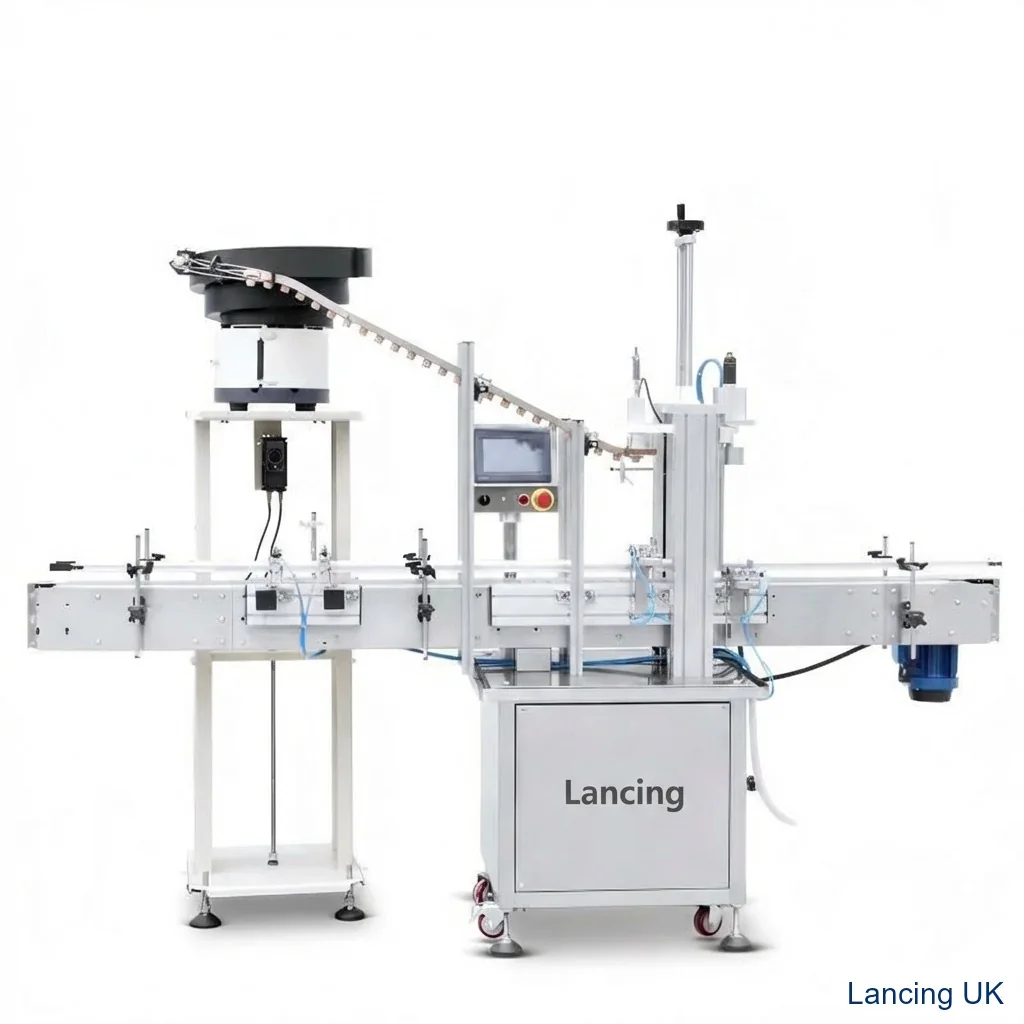
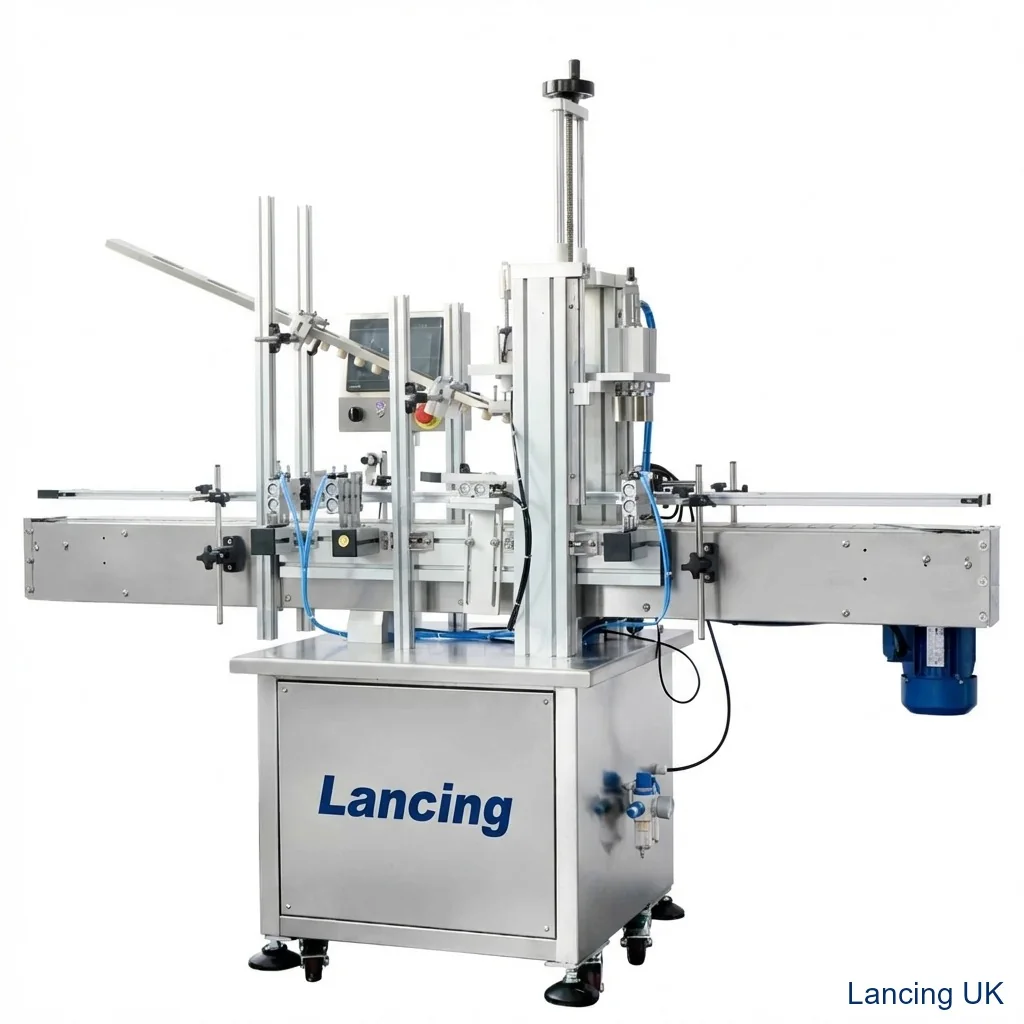
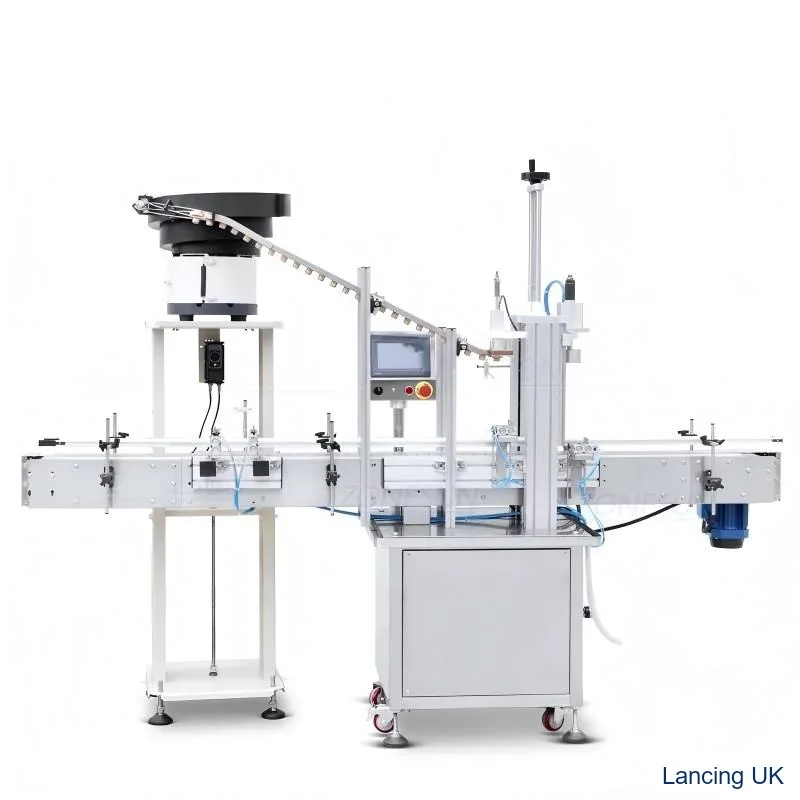
An automatic press-on capping machine for T-corks, inner plugs and similar push-fit closures. A vibrating bowl sorter orders the closures before feeding them to the capping head, helping maintain a consistent orientation and a repeatable insertion depth.

SKU
LU-XG16D3
Throughput
20–30 bottles/minute
Configuration
Quote confirmed
LU‑XG16D3 Automatic T‑Cork Press Capping Machine

Machine overview

An automatic press-on capping machine for T-corks, inner plugs and similar push-fit closures. A vibrating bowl sorter orders the closures before feeding them to the capping head, helping maintain a consistent orientation and a repeatable insertion depth.

Best suited to

  • Spirits and liqueur bottles using T-corks
  • Brewing, beverage, cosmetics and daily chemical lines
  • Producers needing automatic cork orientation before insertion

Key specification

Machine modelLU‑XG16D3
Working voltageAC 220 V / 110 V, 50–60 Hz
Bottle height30–300 mm
Bottle cap diameter18–70 mm
Bottle diameter30–100 mm
Working speed20–30 bottles/minute, dependent on bottle and closure
Working pressure0.4–0.6 MPa
Air connectorOD 8 mm
Conveyor length115 mm wide × 1020 mm long
Machine sizeApprox. 2190 × 950 × 1860 mm
Configuration note: final tooling, chuck design, cork guide, bowl feeder, conveyor and utilities should be confirmed against your bottle and closure samples.

How this machine fits into a T‑cork line

The machine can be specified as a stand-alone capping cell or as part of a broader bottling line. Typical line data includes bottle feed direction, available footprint, conveyor height, bottle accumulation, cork feed position, guarding requirement and whether the capper must synchronise with filling, labelling or packing equipment.

Machine gallery
Specification checklist

  1. Confirm bottle height, bottle diameter and neck finish.
  2. Confirm T‑cork top diameter, shank diameter, shank height and desired insertion depth.
  3. Confirm target output and acceptable changeover time.
  4. Confirm power, compressed air and available floor space.
  5. Confirm whether you require automatic cork sorting, dust cover, guarding, reject handling or commissioning.

Quick answers

What is LU‑XG16D3 T‑Cork Press Capping Machine used for?

An automatic press-on capping machine for T-corks, inner plugs and similar push-fit closures. A vibrating bowl sorter orders the closures before feeding them to the capping head, helping maintain a consistent orientation and a repeatable insertion depth.

What output can LU‑XG16D3 T‑Cork Press Capping Machine achieve?

The expected output is 20–30 bottles/minute. Final throughput depends on bottle stability, cork dimensions, fill/product behaviour, operator workflow and the exact machine configuration.

What samples should I send before ordering?

Send the filled or empty bottle, the T-cork or closure, any available bottle and closure drawings, required insertion depth and the target output. Samples allow the guide rail, chuck and press settings to be specified correctly.

Can this machine be integrated into a filling line?

Yes, where the selected configuration and line layout allow it. Lancing UK can advise on conveyors, sensors, bowl feeding, discharge, filling and labelling integration.

Are final specifications fixed?

Published specifications are guide values. Final configuration, tooling and utilities should be confirmed during quotation against your bottle, closure and production line.

Specify the right T‑corker

Send your bottle and closure details for a practical recommendation.

Share bottle height, diameter, neck finish, cork dimensions, expected units per hour and whether the machine must integrate with filling, labelling or existing conveyors.

Application engineering

Qualify the LU‑XG16D3 with the production closure batch and bottle format.

The published 20–30 bottles/minute range is a reference for suitable bottles and closures. Acceptance should confirm that the vibratory bowl, rail, escapement, bottle handling and press remain stable together at the required good output.

Closure orientation and release

Test the smallest and largest measured tops and shanks through the bowl and rail. Record recirculation, gaps, doubles, damaged decorative faces and the closure position at the capping head after normal refill and restart events.

Bottle support and insertion

Within the listed 30–300 mm bottle height and 30–100 mm bottle diameter ranges, each format still needs its own guide, support and press setting. Confirm neck centring, finished height, top squareness and bottle condition using representative filled or empty samples as agreed.

UtilitiesConfirm the selected AC supply and a stable 0.4–0.6 MPa compressed-air service with the specified OD 8 mm connection arrangement.
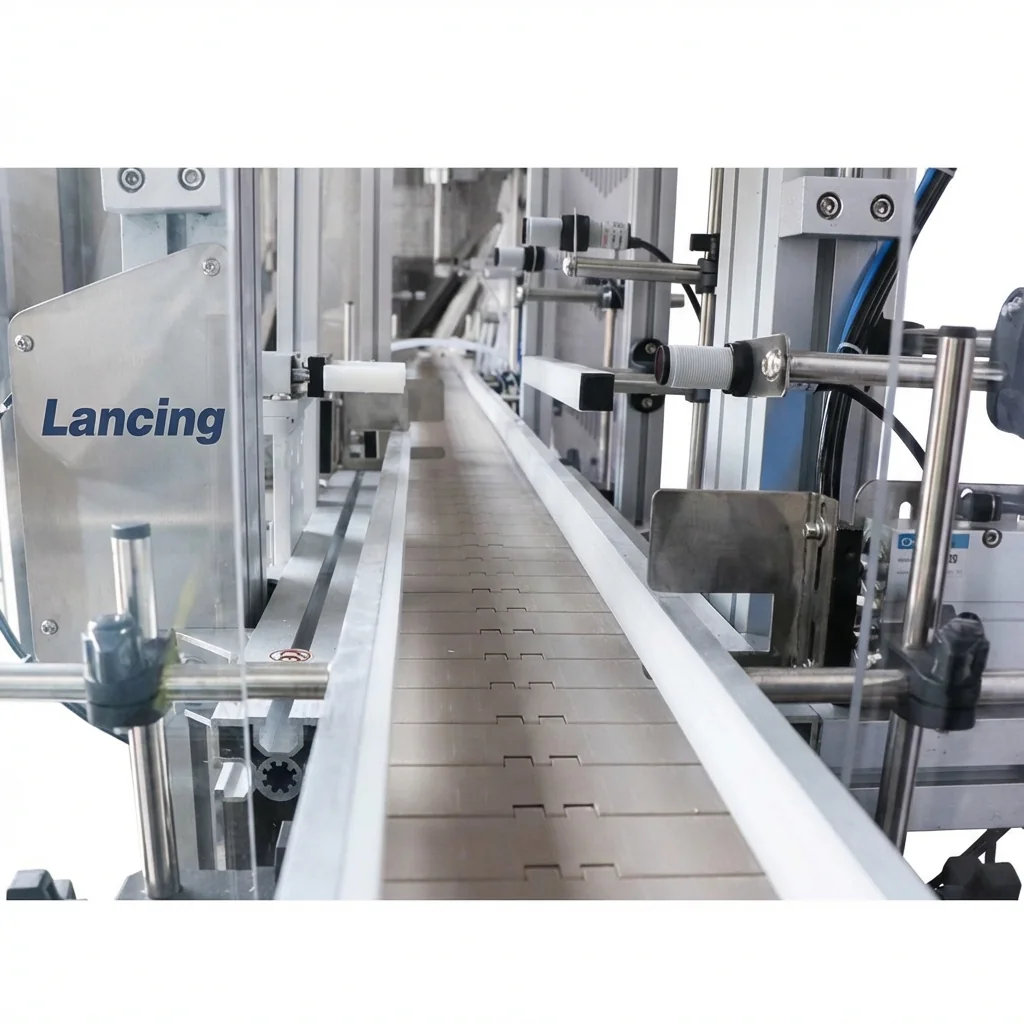
Conveyor interfaceCheck the listed 115 mm wide × 1020 mm conveyor section against bottle base, line height, direction and transfer requirements.
Trial acceptanceAgree good output, finished-height check, permitted cosmetic marks, feeder intervention limit, bottle protection and stop/restart sequence.
Format recordRetain chuck, rail, guide, support, sensor and press settings for every approved bottle and T‑cork combination.

Prepare samples with the compatibility checklist and review feeder-specific issues in the T‑cork feeding guide.

Model qualification

Use the LU‑XG16D3 published envelope as a screening check, then qualify the real format.

The listed dimensions and utilities identify the nominal machine range. They do not prove that every bottle and decorative closure inside those limits will feed, centre and insert acceptably. Final tooling and output should be confirmed with representative production samples.

Published LU‑XG16D3 itemListed valueQualification evidence
Bottle height30–300 mmHead-height adjustment, stable bottle support and safe clearance for the smallest and largest approved bottles.
Bottle diameter30–100 mmGuide setting, centring, base stability and transfer through the supplied conveyor arrangement.
Closure diameter18–70 mmTop and shank measurements, bowl orientation, rail clearance, escapement separation and chuck contact.
Reference working speed20–30 bottles/minute, dependent on bottle and closureSustained accepted-bottle output including feeder recovery, stops, interventions and rejects with the agreed samples.
Working pressure0.4–0.6 MPaStable site air supply and acceptable insertion, bottle condition and finished height across the approved sample range.
Electrical supplyAC 220 V / 110 V, 50–60 HzFinal supply, controls interface and installation requirements confirmed in the project quotation.

State what the reference speed was achieved with

Record bottle and closure identity, feeder level, line spacing, air setting, good-bottle count and the duration of the run. The listed 20–30 bottles/minute range is a model reference; the project acceptance result should describe the exact format and conditions rather than treating the range as a guarantee for an untested closure.

Prepare samples through the compatibility checklist, review the T‑cork feeder test and use the spirit and premium bottle guide where visible finish or directional decoration forms part of acceptance.